

There are one million new books published each year. With so many books and so little time, where do you begin to find your next must-read? There’s the New York Times Bestseller list, the Goodreads app, the Cape Library’s Staff picks shelf and now Martin’s Must-Reads.
Every Wednesday at 7:42 a.m. and 5:18 p.m., and Sunday at 8:18 a.m., Betty Martin recommends a must read based on her own personal biases for historical fiction, quirky characters and overall well-turned phrases. Her list includes WWII novels, biographies of trailblazers, novels with truly unique individuals and lots more. Reading close to 100 titles a year, Betty has plenty of titles to share. Tune in each Wednesday and visit KRCU.org for previous must-reads.
Local support for "Martin's Must Reads" comes from the Cape Girardeau Public Library and Kent Library at Southeast Missouri State University.
-
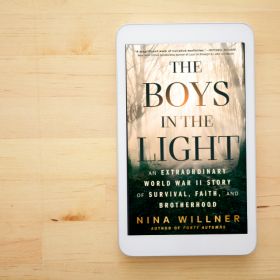 1944 - “Somewhere in the forest, Saxony-Anhalt, Germany. Second by second, the escape team shifted glances at one another to get a pulse on what others were thinking. Just then, a lone British fighter was spotted in the sky, and the guards ordered their prisoners off the road so they could not be seen from the air. It was exactly the distraction they had been waiting for. Eyes locked, and their leader yelled, ‘Go!'”
 -
 “The right book in the right hands of the right person at exactly the right moment can change their life forever. At least, that’s what Alfie has always believed."
 -
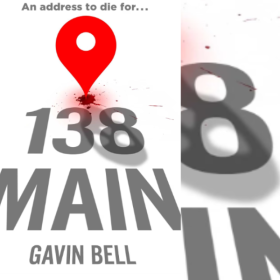 “You were right, Zoe. The killer has done this before. He’s done the same thing three times in the past couple of weeks.” Zoe was still lost. It didn’t entirely surprise her that this could be the work of a serial, although there hadn’t been any other crimes like this reported locally. But how could the Feds have linked it to other killings so quickly?"
 -
 “Old guy,” my husband said in a low voice, his lips touching my ear. Near the exit sign.” “Stop it.” That joke itself was old as rocks. Jonathan raised his eyebrows. “I’m serious. He kept looking at you in the ticket line. Then he followed us through Medieval Art, and now he’s just standing there. Do you see him? He looks at you whenever you’re not looking.”
 -
 “As I was writing this book, a curious fact caught my eye. It was regarding a law passed in 1928 that made it legal to sterilize any person in Mississippi deemed an imbecile. The all-male board that decided who qualified for sterilization included in their criteria not only those who were deemed insane, idiots, imbeciles, or epileptics, but also the disabled, alcoholics, prostitutes, and sexually promiscuous women.”
 -
 “The morning had been a long one. Liam and his father out since dawn. A north-westerly breeze has been at them for hours, scrupulous in its self-appointed work of lifting the caps from their heads, in hurling a scree of water over them."
 -
 “Beckitt’s emergency began on a calm spring morning: an expansive chill in the air; the sun soaring over rangy, adolescent clouds; miles of rolling green mowed into submission, flanked by grand columns of oak and maple, through which the wind shivered, And a symphony of cell phones throbbing in sudden unison. Terror and confusion jolting through town like an electrical impulse.”
 -
 “I’ve spent plenty of time with Jorge. I probably understand his predicament better than the people whose job it is to handle him. Jorge and I are both inmates at an insane asylum that passes itself off as a day program for autistic young adults. We have been in and out of each other’s lives since special ed preschool. We graduated from different schools - well, I graduated. He got a certificate of completion.”
 -
 “To Emmett, all the houses in this part of the country looked like they’d been dropped from the sky. The Watson house just looked like it’d had a rougher landing. The roof line sagged on either side of the chimney and the window frames were slanted just enough that half the windows wouldn’t quite open and the other half wouldn’t quite shut. In another moment, they’d be able to see how the paint had been shaken right off the clapboard.”
 -
 “I have one of the weirder jobs. I’m the recipient of a fellowship from the Lockwood Library, you know, the museum on Fifth Avenue.”


