What makes a city a place where talent wants to live, work, create and stay?
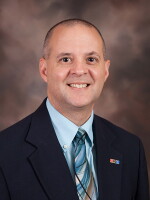
The Cape Chamber’s Annual SEEDS Symposium will be held on Thursday, November 19, 2026 at the Drury Plaza Conference Center. This year’s keynote speaker is Dr. David Staley, Professor of History, Design and Educational Studies at The Ohio State University. His address is titled “Cape Girardeau: Knowledge Town.” I spoke with him to get a preview of his address which is drawn from a book he co-authored titled “Knowledge Towns: Colleges and Universities as Talent Magnets.”
Woods: Well, thanks for being here. We appreciate it. So you're going to be in Cape Girardeau for the SEEDS conference this week and this paper that you wrote with a co-author is called "Knowledge Towns." Tell me about that. I'm fascinated by this and how universities can be talent magnets, right?
Staley: So we're accustomed to talking about college towns, right? And this is the idea, especially that a college or university is located in a, usually a small town. We usually talk about college towns. We're talking about smaller towns, secondary cities. What we've tried to do in this book is to talk really about college towns 2.0, which is why we use the term "knowledge towns."
And the genesis of the book started, frankly, during the pandemic, when more people were working from home, And then what they discovered was twofold. First of all, that they enjoyed working from home, the pandemic notwithstanding, they enjoyed working from home. And they also learned that, um, if we are working from home, if more of certain types of jobs can be done remotely, well, then maybe I will choose to live in a place where I actually want to live. Or all sorts of reasons, quality of life, can afford a house closer to family. So instead of, you know, living in the Bay Area, I can live in, you know, Columbus, Ohio, or rural Vermont. And we actually saw some of that during the pandemic. There were people that were not just simply moving to more desirable locations. But there were some places that were actually trying to incentivize workers. And, you know, we can point to example Tulsa, Oklahoma, was doing this, Morgantown, West Virginia, they were they were actually incentivizing knowledge workers, say, come live here because the amenities are tremendous. And in some ways, that pattern begun during the, during the pandemic, has continued, now 6 years on from this. And so what we argue in the book is that as an economic development strategy, cities and regions and places should be attracting should be seeking to attract talent. The usual way we think about this is attract businesses. We're flipping that and saying the way that you, the way that you draw business is, frankly, is to draw talent to your area. So, an important part of the book, an important part of what I'll be talking about on Thursday is what makes a place attractive? What makes a place attractive for talent? Hence, talent magnets. The location of a college or university is a part, an important part, maybe even the most important part of that strategy. But there are other things as well. And this is what I'll be talking about on Thursday.
Woods: So if a region already has a university, they're way ahead of the game, right?
Staley: That's true, yes.
Woods: And so how can how can universities be instrumental in helping with this? I know, you know, we're graduating, graduates all the time, but you want them to stay, I guess, with that, that knowledge, stay here, right?
Staley: Yes. So there are a couple of ways. So, and I'm not talking about Southeast Missouri State here, when I say this, but there are an awful lot of of colleges that might be located in a town, but nothing else. And what we're talking about is the college or the institution of higher learning, taking on a different, or at least an additional mission. That being economic development and creative placemaking. So, that example you just gave here, for instance, colleges are, in fact, an important part of their business model is attracting talent. But what we find in a lot of places, a lot of areas, is that that talent might arrive and spend 4 years at that institution and then leave. What are strategies that, not just simply the city, but that the college could take, what are strategies they could be taking to keep that talent local? You've attracted talent here. How do we keep them there? You know, we sometimes talk about brain drain. I think of this as not exactly brain drain. It's more brain seepage. And and maybe I'm playing around with words there, but it's brain drain is you're just you're just leeching talent. You're losing talent. Um, the seepage I'm talking about is you're actually pretty good at attracting talent, but unable to retain them. And that'll be one of the things I'll talk about on Thursday. Stickiness is the term. I wish I'd invented it. Stickiness, the degree to which people arrived, how it arrives, and stick around and stay there.
Woods: And it seems to me, you know, the university can't do this on their own, so partnerships with the chambers and some strategic business partners that are saying that, hey, here's our workforce needs. We know you've got these folks here. Let's figure out. I mean, it has to be a multi-prong attack, I would think, to get that talent to stay by a lot of different players.
Staley: Yes, no, you're absolutely right. Uh, I don't, colleges can't do this alone. But neither can they simply pass off the responsibility onto others. And you're right, there has to be, there has to be tight knit agreements and working relationships between all the all the institutions you just laid out here. That is not to say that universities can't play a role. And one of the things that they can be doing is helping to develop entrepreneurial pipelines, not just simply existing businesses, but is there an entrepreneurial ecosystem? So that you have young talent, you have students arrive in a location. Are there opportunities for them to develop their own businesses, to start their own enterprises? And that, I think, is something that all colleges and universities can be engaged in.
Woods: Well, you know, higher ed is changing, and you know this probably just as well as anybody. And it seems to me that this workforce piece and this tie in for universities to really figure this out because this is a potential, at least in my mind, for growth, as, as enrollment has been a challenge for many universities across the country. If they can figure out ways to partner with workforce in this, make this talent pool even stronger. It has to be a win-win for everybody, right?
Staley: Everybody. Yes. Yes. One of the things that we lay out in the book is, and to be clear, when we talk about knowledge towns, we're talking about cities and universities of all sorts of different scales, including places like Ohio State, in a large city or a large R1. One of the things we argue in the book is that the knowledge town strategy scales. So when I, when I'm there Thursday talking about Cape Girardeau, I am not at all assuming that Cape Girardeau and Southeast Missouri State are going to look just like Ohio State or Columbia. They will be appropriate to scale, I think. And so any institution, I think, can engage in this sort of strategy.
Woods: With higher ed changing so much, having this set up where you have universities and workforce all working together, that's something that's been happening here a lot. There's been a lot more discussion about how can we help the workforce? What does the workforce need from us? Conversations going back and forth, which seems to me will strengthen everybody.
Staley: Uh, yes. So, uh, one implication of this is that colleges and universities need to take on a different role. And the way that I phrase it, in particular, in our book, is that the challenges that you describe, that higher education is facing right now, we're all dealing with them. Um, that uh, that this is a strategy for reviving higher education. So it's not just simply a survival strategy. It's a thriving strategy. And so, and in a lot of places, there is a tight coupling, um, most people maybe don't want to admit it, but there's a tight coupling between the college and university and the town. And that their fate, their futures are intertwined. So, and I don't mean this to talk about Cape Girardeau, but there are other places where the college, for instance, is having enrollment issues. And they're not drawing as many students and, you know, there's the possibility that the college, the college could close down. That would be horrendous for the town. The town is dependent on that college being there. So our talent magnet strategy, our knowledge town strategy, is about the university and the town thriving together. A flywheel effect, if you will.
Woods: You have to work together, and talk, and share strategies and ideas...
Staley: and their futures are intertwined that has to be accepted first. That has to be acknowledged first. And a lot of places haven't acknowledged that yet. Once that's acknowledged, then the 2 entities, the 2 institutions, need to work together. Again, not just simply to survive, but to thrive and grow.
Woods: Well, this has been fascinating. We're looking forward to seeing you on Thursday here in Cape Girardeau, Dr. Staley. So thanks for taking time to talk with us. We appreciate it.
Staley: Thank you very much, Dan.