

On the morning of Aug. 26, rural villages in Nepal were destroyed by a devastating flood that stormed down from the Himalayan Mountains. Remote villages were destroyed, and thousands of people were killed or are still missing in both China and Nepal. As of Sept. 11, 1,369 people were confirmed dead, while 5,132 were reported missing, according to NepalDisaster.com.
The disaster stretched from the northern part of Nepal, spreading almost the entire length of the country, carrying debris and bodies that were reportedly swept all the way into India.
Sophomore general management major and president of the SEMO Nepalese Student Association (NSA), Achint Dahal woke up to learn about the devastation in his home country.
“It’s devastating,” Dahal said.
Dahal expressed relief that no SEMO students were affected, but was heartbroken for those who had lost their lives.
“But that being said, there are a lot of families who have already lost their family members and I feel really sad for that, and it’s really devastating for the news that I’ve heard in the past couple of weeks because this thing was not a warning and it was an effect of immediate glacier attack on the border side. So we didn’t have any warning, or there was no rainfall, no flood.” Dahal said.
Many of the remote villages impacted by the floods are now accessible only by helicopter. These places were also reliant on hydropower. Most of those hydropower plants are predicted to be destroyed by the flood.
The main area of impact was on the border between Nepal and China, where land trade and the Kailash pilgrimage, a Hindu religious journey, occurred. Trade in the border region provided for the livelihood of most of the people there.
Assistant professor of biological and environmental sciences, Dr. Nelish Pradhan, noted that many of the devastated villages were still recovering from a previous disaster in 2015.
“From what I’ve seen online, read and heard from other people is that it’s pretty catastrophic,” Pradhan said. “I mean it’s almost straight out of a disaster movie levels of destruction, whole villages wiped out and I think it’s important to note that these were the same villages that were affected by the 2015 earthquake. So it’s the same area that they were just about rebuilding from the earthquake about 12 years ago and now it’s another disaster.”
The cause, Pradhan said, was determined to be a 600-meter-wide, or roughly 1,968.5 feet, glacier falling from a height of 1.2 kilometers, or roughly 3,937 feet. The glacier was weakened by rising temperatures, causing the ice to melt, ultimately leading to cracks that caused the glacier to give way. Pradhan believes this was caused by human-induced climate change.
“The reason for the retreat of the glaciers, the glacial melting, is climate change and it is human-induced climate change,” Pradhan said. “I think it’s important you mention that. Nepal and other Himalayan countries, I would say all the way from Pakistan, Afghanistan, it goes up into Myanmar. They are very vulnerable because of this. This is just one of the numerous catastrophic events that are likely to happen again in the future.”
This glacier melting could lead to more flooding and the eradication of a major water source for the region.
“The glaciers will continue to melt. They will crack. Eventually they will give way and then cause another catastrophic event like this.” Pradhan said. “And even if it's a slow melting of the glaciers, where it does not lead to catastrophic flooding, you have to know that the glaciers in the Himalayas provide water to about 2 billion people. So that's a quarter of the world’s population. If they are gone, or they even recede to the point where there is not enough water, then that is going to have its own catastrophic consequences.”
Dahal said that Nepal itself contributes very little to the problem of climate change, yet is bearing most of the consequences.
“Nepal accounts for less than 0.1% of global greenhouse emissions and its share of global CO2 emissions was only about 0.05 in 2024. … In Nepal, three out of four cars are electric vehicles. So that is the main concern,” Dahal said. “Yet Nepal is experiencing some of the most serious consequences in global warming, so most of the media and even the Nepalese government, I think we are seeking for a climate justice issue at this point because we have contributed very little to the global warming but we are facing a disproportionate risk from floods, landslides and glacier-related hazards like we’re having right now.”
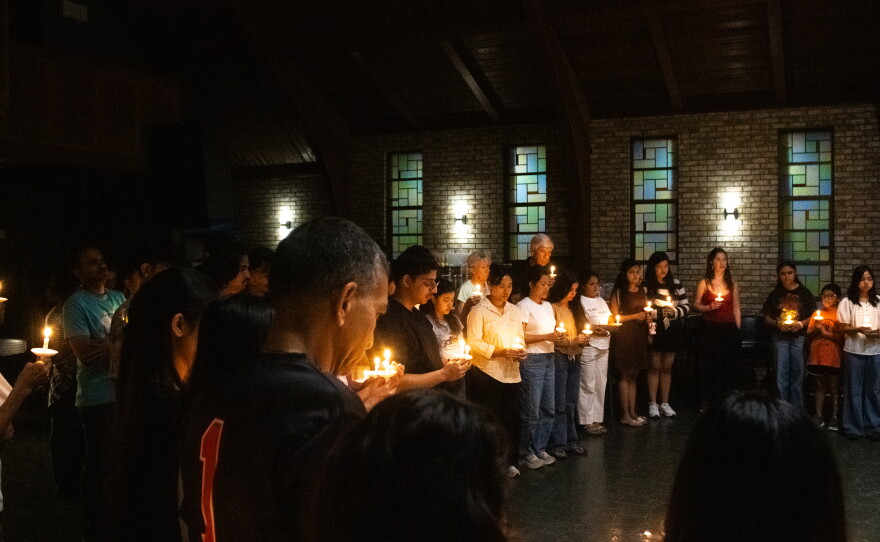
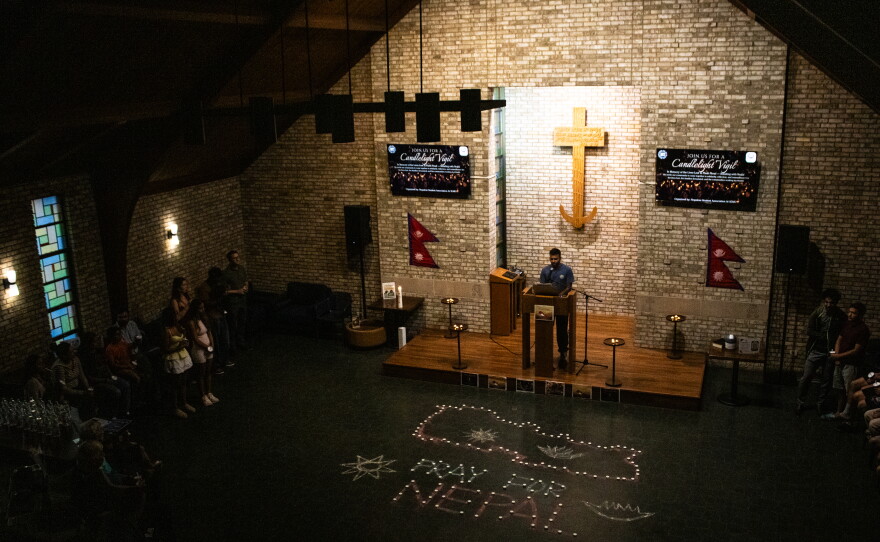
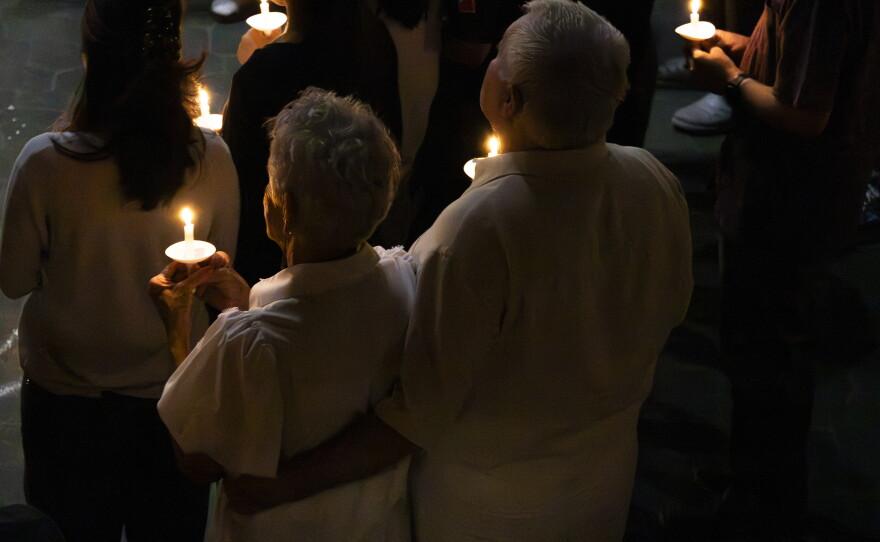
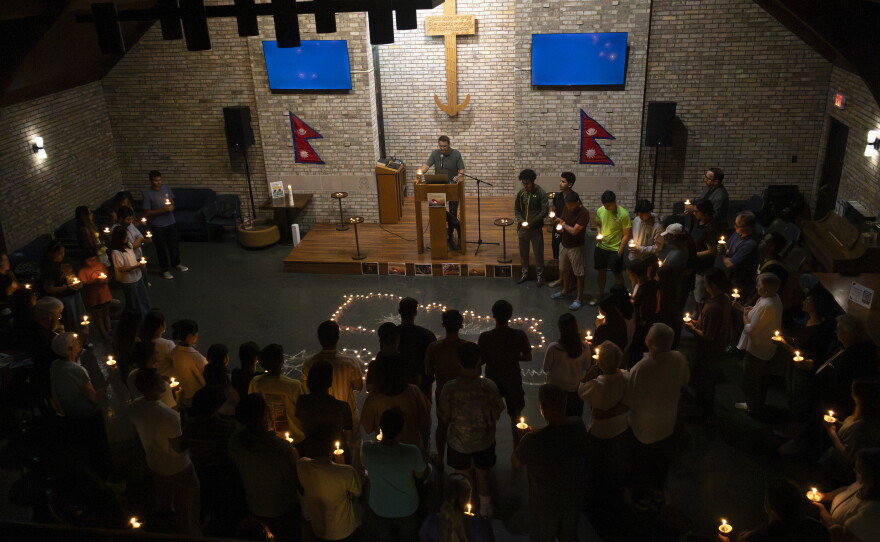
The NSA hosted a candlelight vigil for the flooding victims at Hope Lutheran Ministries on Wednesday, Sept. 9, from 7 to 8 p.m. Participants lit candles to honor the lives lost and stand with the people of Nepal.
With recovery efforts underway in Nepal, roughly 13,646 people have been rescued as of Sept. 11, according to Nepaldisaster.com. However, the relatively new Nepalese government is facing challenges in dealing with the disaster due to a lack of resources and the rural terrain. The government has set up the Prime Minister Disaster Relief Fund to accept international assistance for the relief efforts.
“Most of the country is economically poor,” Pradhan said. “There aren’t any resources. It’s very challenging in this sort of terrain that we’re dealing with to even be able to get to some of these places to help. So any outside help is appreciated and otherwise I think it will take a long time [to recover], and I don’t think time is on the side of the people there.”
As Nepal recovers from historic floods, the SEMO community comes together to reflect and honor those who died.
