

Southeast Missouri State University marked a milestone for regional healthcare education as supporters, students, faculty, and community leaders gathered to celebrate the Roy Blunt Health Professions Hall. The ceremony highlighted how a modern, well-equipped facility will strengthen hands-on training, deepen community partnerships, and help meet growing local health care workforce needs.
John Yount, a senior in health sciences and master of ceremonies for the event, framed the new hall through the lens of a student preparing to enter graduate training and clinical practice.
Yount—heading to Maryville University for a master’s in Occupational Therapy—spoke passionately about how his time at SEMO shaped his academic habits, work ethic, and vocational confidence. He emphasized that rigorous curricula, disciplined study strategies, and meaningful lab experience were essential to his development. He predicted that the new facility’s laboratories and equipment would provide future students with the same valuable, career-ready training.
Yount also publicly thanked the faculty members who shaped his undergraduate experience, naming mentors across allied health disciplines whose guidance helped him grow into the student and emcee he is today.
Dr. Jason Wagganer, chair of the Department of Allied Health, Kinesiology, and Sports Sciences, described the hall as more than a building: a platform for experiential education. He outlined plans for state-of-the-art laboratory and classroom spaces created by faculty to anticipate evolving workforce needs, integrate new technologies, and support innovative models of care and education. These resources—combined with committed instructors—will aim to produce graduates who are confident, capable, and ready to serve from day one.
Southeast Missouri State President Dr. Brad Hodson reinforced the university’s mission to deliver experience-driven education that is both high-quality and affordable. Hodson noted the program’s seven national accreditations as evidence of academic rigor, and highlighted SEMO’s focus on access, pointing to an average graduate debt of about $22,000 as a measure of the institution’s commitment to affordability.
He framed Blunt Hall as a tangible step toward matching facilities with program quality, enabling students to log clinical hours, practice skills in innovative labs, and translate lessons into life-changing care.
Former U.S. Senator Roy Blunt, whose name the building bears, reflected on major shifts in health care—personalized medicine, the growing role of data, and rapidly evolving clinical practices—and praised a facility designed for that changing future.
He emphasized that the building will prepare a new generation of health professionals to deliver individualized care and to assume broader responsibilities across health teams. Blunt also lauded the university’s potential to retain trained professionals in the region, further strengthening local health systems.

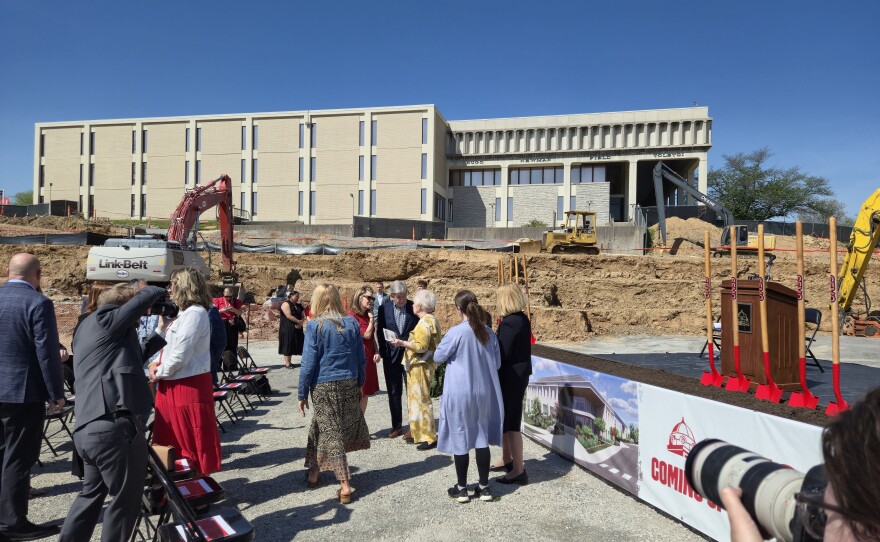







University leadership and board members framed the project as an investment in the region’s economic and social health. The Roy Blunt Health Professions Hall will serve as a pipeline linking local students to high-demand careers—physical therapy, respiratory care, occupational therapy, and other allied health roles—while encouraging graduates to remain and work locally.
Speakers connected the site to campus history (the location once housed Albert Hall) and emphasized that expanding the supply of trained health professionals carries significant economic and community benefits.
The ceremony culminated in a multi-round groundbreaking that involved the Board of Governors, legislative partners, higher-education officials, faculty, facilities staff, construction and design teams—including representatives from Penzel Construction and The Lawrence Group—and SEMO’s executive cabinet.
President Hodson invited participants from across the university and project partners to share the moment—each group taking part in the symbolic shovelfuls of soil—underscoring the collaborative effort behind the project and the broad institutional and community investment in future health professionals.
Speakers stressed ongoing collaboration with local health systems, schools, and employers to ensure curriculum and clinical placements meet regional needs. Faculty-designed lab spaces and close ties with clinical partners aim to produce graduates who are both technically skilled and compassionate, ready to contribute from day one.
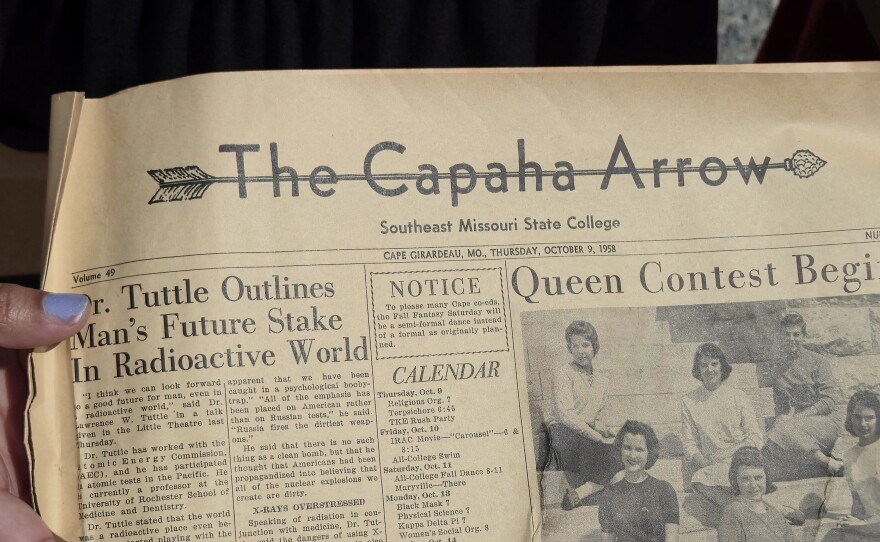



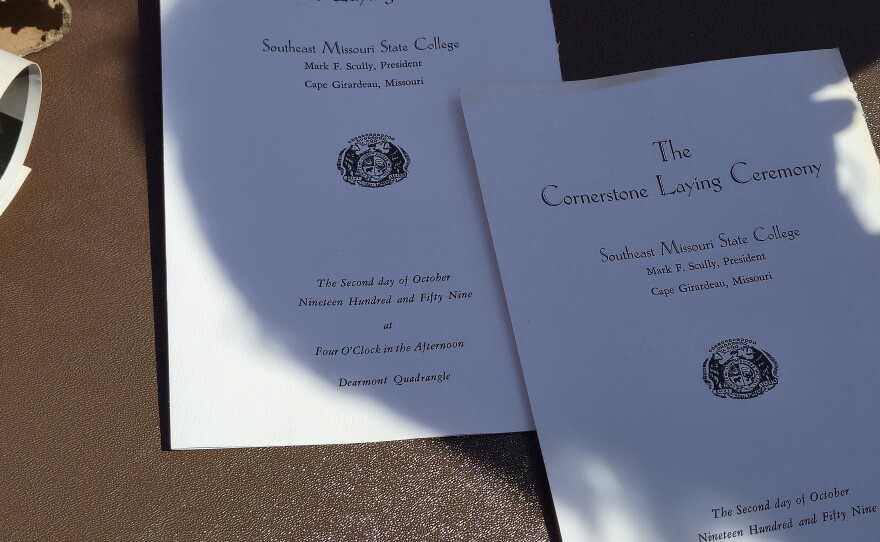
As the ceremony drew to a close, organizers revealed a newly discovered time capsule recovered during the demolition of Dearmont. Opened the day before, its contents—now displayed on a table for attendees—offer a snapshot of what mattered to the university community in the mid-20th century.
The discovery provided a symbolic bookend to the event: a moment to honor the institution’s proud past while looking forward to the promise of a new facility and the future it will help create.
Attendees left with a clear message: the Roy Blunt Health Professions Hall is an investment in people—students, faculty, and the wider community—and in the future of health care in the region.
By combining modern facilities, engaged faculty, affordable access, and collaborative partnerships, the hall aims to deliver training that meets current workforce demands and anticipates future changes in health care delivery.
The groundbreaking marked the start of construction and a shared commitment to preparing graduates who will strengthen local health systems for decades to come.
Construction of the Roy Blunt Health Professions Hall is expected to be completed in the spring of 2028.

