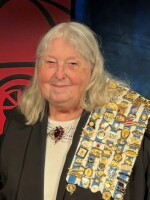
In celebration of the 250th Anniversary of our country, local members of the National Society Daughters of the American Revolution will highlight the patriots buried in Southeast Missouri.
Family historians believe that John Hahs was likely born around 1755 in York County, Pennsylvania. Around 1764, his family relocated to Lincoln County, North Carolina.
Although the surname is now commonly spelled Hahs, historical records show a variety of spellings, including Hass, Hauss, Huss, Hoss, Hause, and Horse.
During the Revolutionary War, John served in the militia in Lincoln County, North Carolina. He appears on the 1782 return list of Captain William Moore’s Company alongside several of his neighbors and was paid nine pounds, four shillings for his service.
In 1786, John Hahs purchased 300 acres of land in Lincoln County, located on both sides of Leonard’s Fork of Indian Creek. He is listed in the 1790 census as the head of a household consisting of three males and four females. Deed records indicate that he sold portions of this property in 1793 and again in 1799.
The John Hahs family migrated with George Frederick Bollinger to the Cape Girardeau District, where they made their home in the Dutch Settlement among many of their former neighbors from North Carolina.
In 1802, Don Louis Lorimier, Commandant of the Cape Girardeau District, acting under orders from Governor Charles De Lassus, enlisted local men for militia service to address conflicts with hostile Native American groups near New Madrid. John Hahs served in this six-week campaign. In recognition of his service, he received a letter from De Lassus entitling him to 650 arpents of land, and in 1806 he appeared before the First Board of Land Commissioners to confirm his claim.
Testimony from his neighbor Adam Statler states that John Hahs settled on the Little White Water in the Dutch Settlement by 1801 and, prior to December 20, 1803, had inhabited and cultivated the land. At that time, he had a wife and nine children. His original land patent (Survey No. 777) is now located in present-day Bollinger County along the Whitewater River near Sedgewickville.
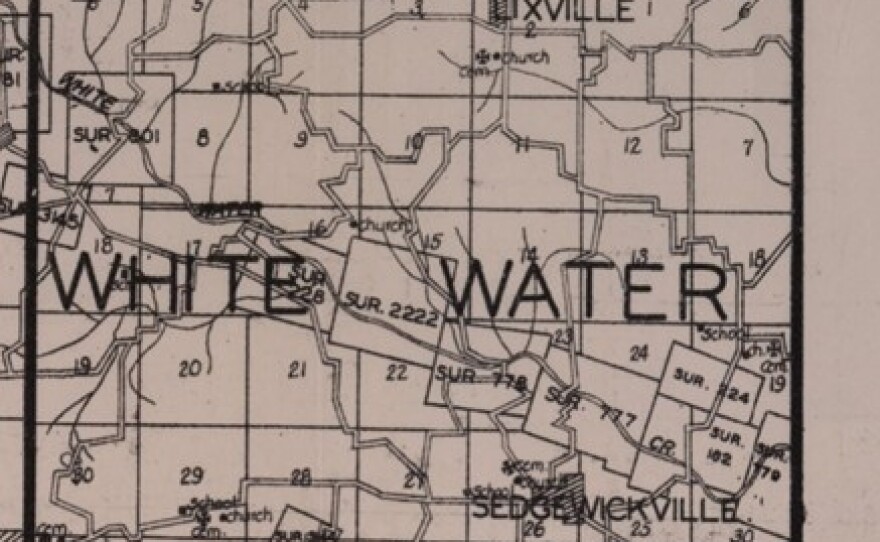
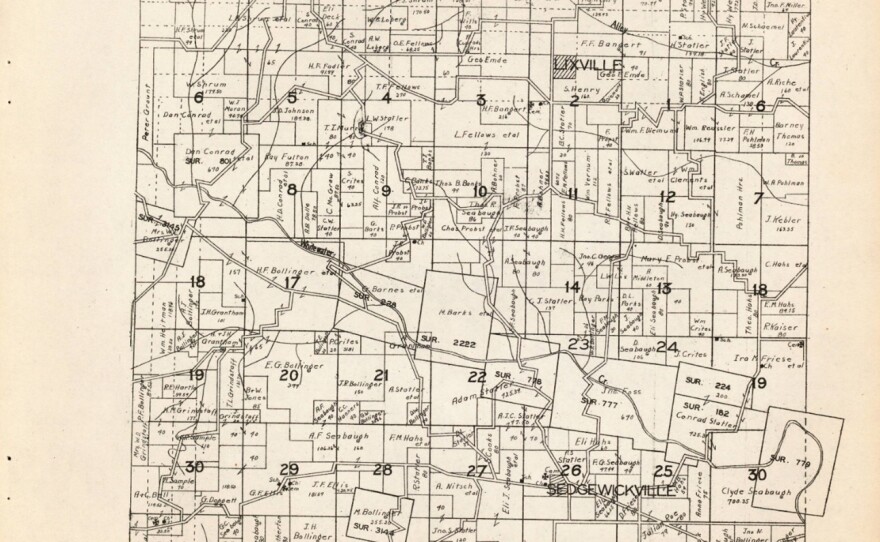
John Hahs had eleven known children: Catherine (who married Daniel Hildebrand); Margaret; Francis (who married first Miss Nation and second Mary Rhodes); Maria; Jacob (who married Catherine Barks); Elizabeth (who married Alfred S. Moore); Adam (who married Susanna Grindstaff); Daniel (who married Wilhelmine Meyers); John (who married Emily Whybark); Hannah Barbara (who married Alexander Middleton); and Christopher (who married Catharine Probst).
His will, dated February 7, 1809, is recorded in Cape Girardeau County.It names his wife Elizabeth and three of his daughters, while four of his sons are identified in a later court document. Although his exact burial location is unknown, on March 15, 2022, the Missouri State Society Daughters of the American Revolution honored him at the Missouri State Capitol with inclusion on a bronze memorial tablet recognizing Revolutionary War patriots buried in Missouri. Several descendants attended the ceremony, though many more of John Hahs descendants remain throughout Southeast Missouri and beyond, continuing his legacy.
Compiled by Morgan Meyr Lake, Kings Highway Chapter, NSDAR
Sources:
Cape Girardeau County Archives. Will of John Hoss and Distribution of Estate.
Houck, Louis. The Spanish Regime in Missouri. November 1, 1803.
Houck, Louis. A History of Missouri: From the Earliest Explorations and Settlements until the Admission of the State into the Union.1908.
Lantz, Sarah Huss. Johann Jacob Hass Genealogy.2006.
Lincoln County, North Carolina. Deed Book 3, p. 428, March 21, 1786.
North Carolina Revolutionary War Pay Vouchers, no. 4584, roll S.115.100.
Plat book of Bollinger County, Missouri. “pla-bollinger-07” Missouri Digital Heritage. www.sos.gov.
Plat of Survey for 785 arpents in the Dutch Settlement, District of Cape Girardeau, February 27, 1800.Papers of Original Claimants, 1777–1851.First Board of Land Commissioners (French and Spanish Land Grants). Record Group 951.Missouri State Archives, Jefferson City.
“Return of Captain William Moore’s Company, 1782.” Documentation associated with DAR Application no. 639463.Daughters of the American Revolution.
United States. 1790 Census, Lincoln County, North Carolina.